
Why UK Schools Still Rely on Printed Homework Planners
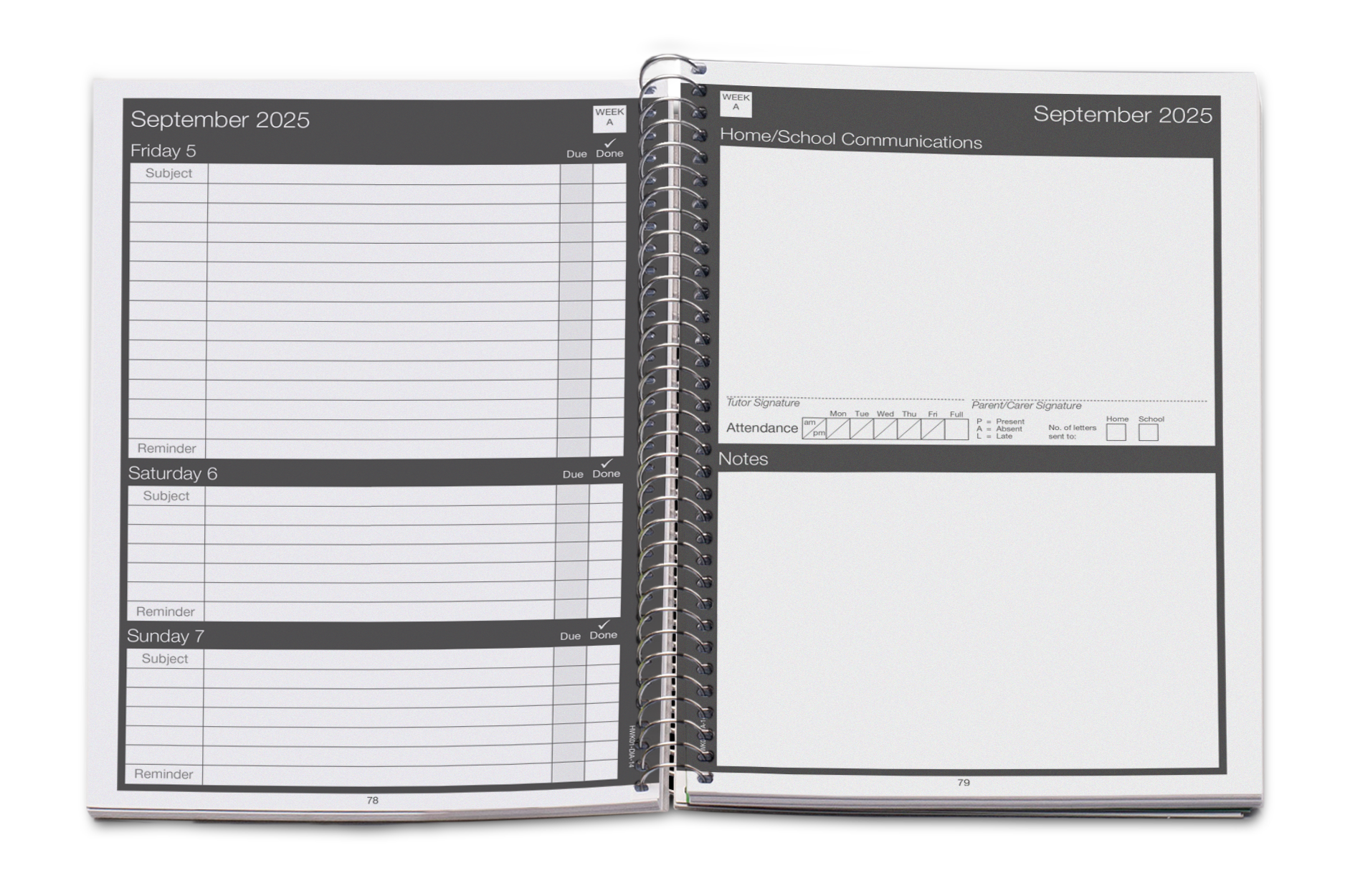
Every year thousands of primary and secondary schools across the country continue to choose printed homework planners UK students can use daily, even as more digital tools and homework apps appear on the market. On the surface it might seem surprising, but when you dig deeper, it becomes clear why printed planners remain one of the most effective, affordable and reliable organisational tools in education.
In fact, printed planners are still so embedded in school life that removing them often creates more problems than it solves. From improving student organisation to supporting safeguarding, communication and learning habits, a physical planner has advantages that digital platforms simply cannot replicate.
This article in our HomeworkPlanners.co.uk blog campaign explores why printed planners endure, what benefits they provide for both students and staff, and how bespoke designs allow schools to integrate their own values, routines and behaviour systems seamlessly.
Why Printed Planners Still Matter in a Digital Age

As UK schools increase their use of Chromebooks, tablets and online homework systems, you might expect the traditional homework planner to fade away. Yet, the opposite has happened. Printed planners remain the backbone of daily organisation in thousands of classrooms.
Here are the main reasons why.
1. Printed Planners Build Strong Organisational Habits
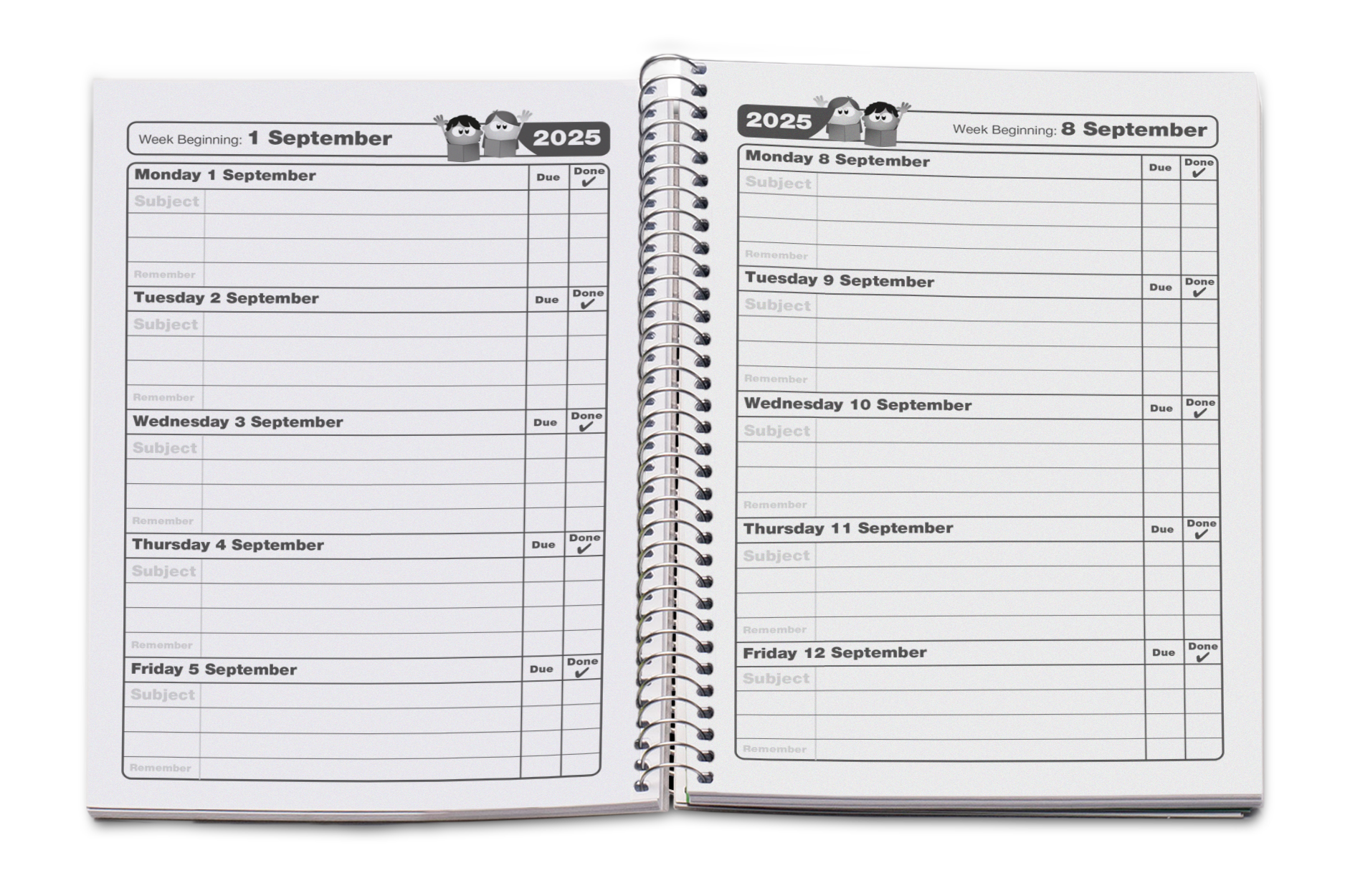
A physical planner encourages students to:
write tasks down clearly
review upcoming deadlines
break larger assignments into steps
form consistent routines
The act of writing by hand has been shown to aid memory and cognitive processing. Research from the British Psychological Society indicates that handwriting supports information recall more effectively than typing.
A planner is not just a book; it is a daily behaviour builder.
2. They Help Reduce Cognitive Load
Secondary students especially face huge mental demands juggling:
homework
revision
subjects
assessments
extracurricular activities
A printed planner becomes their external brain, allowing them to unload information safely.
This reduces overwhelm, which is crucial at KS3 and KS4, where workload increases significantly. Digital apps can add pressure with notifications, log-ins or screens; a printed planner remains simple and predictable.
3. They Support School‑Home Communication
For parents, a planner is the perfect bridge between school and home.
It provides:
clear homework details
assessment dates
reading logs
key messages
behaviour comments
pastoral information
attendance notes
Parents often tell schools that a printed planner offers transparency they simply do not get from apps, especially where digital access varies between households.
This also supports Ofsted’s expectation for effective communication and parental engagement.
4. Planners Strengthen Safeguarding
This is one of the most important reasons printed planners remain essential.
Schools use planners to:
record behaviour incidents
report concerns
log wellbeing notes
track attendance issues
save tutor comments
A printed planner creates a tangible, chronological record that follows the student throughout the year. It supports DSLs by providing contextual information and helps pastoral teams spot patterns early.
Digital systems can be useful, but they can’t replace the “always‑available” nature of a planner that lives in a student’s bag.
5. Printed Planners Reduce Screen Time
With concerns about children’s digital reliance rising, many schools and parents prefer to keep homework instructions, routines and behaviour logging offline.
KS2 and KS3 pupils, in particular, benefit from reducing screen time in the evenings. A printed planner enables families to structure homework in a healthier, distraction‑free way.
Organisations such as YoungMindsw.youngminds.org.uk have repeatedly raised concerns about the link between excessive screen time and anxiety. A planner offers a calm alternative.
6. Reliability: They Always Work, Even When Wi‑Fi Doesn’t
Printed homework planners do not:
crash
lose passwords
require charging
need system updates
rely on apps
Schools repeatedly tell us: “Printed planners simply work.”
For teachers, this means no wasted lesson time chasing log-ins or resetting accounts. For students, it means guaranteed access to their homework details at all times.
7. They Reinforce School Identity and Values
This is where bespoke printed planners really shine.
Custom pages can include:
school values
behaviour policies
reward systems
attendance expectations
safeguarding pages
wellbeing check-ins
uniform guidance
This makes the planner not just an organisational tool, but a personalised handbook that reflects the school’s culture.
You can see examples of these customisations here:
Secondary School Homework Diaries and Planners — Homework Diaries and Planners
How Bespoke Printed Homework Planners Support Learning
Printed planners do more than help students remember their homework. They actively support learning behaviours that impact long‑term success.
Below are the core educational benefits.
1. Encouraging Homework Completion
Research from the Education Endowment Foundation (EEF) suggests homework can significantly improve attainment, especially at secondary level. However, the study also highlights that clarity and consistency are key to its effectiveness.
A printed planner promotes:
clear instructions
simple tracking
visible deadlines
reduced forgetfulness
This makes homework more manageable and less intimidating.
2. Supporting Revision Planning
Printed planners can include:
revision timetables
subject breakdowns
assessment calendars
exam technique advice
Schools often use bespoke planning pages to help students develop better exam routines, especially in Years 10 and 11.
This reduces last‑minute panic and improves time management.
3. Building Independence in KS2 and Early KS3
For primary and younger secondary pupils, a planner teaches:
responsibility
time management
accountability
personal organisation
These habits become essential during the transition to secondary school, and they are far easier to establish early with the help of a physical planner.
4. Supporting Neurodiverse Learners
Printed planners are incredibly beneficial for students with:
ADHD
autism
dyslexia
processing difficulties
Why?
predictable layout
clear structure
minimal distractions
easy customisation
visual prompts
Digital systems can often overwhelm neurodiverse learners with too much visual noise or too many steps. A physical planner offers security, structure and clarity.
This aligns with advice from organisations like the National Autistic Society.
Why Bespoke Planners Make the Biggest Difference
Off‑the‑shelf planners are useful, but bespoke printed planners allow schools to tailor content to their exact routines.
Custom features may include:
school maps
uniform pages
house point systems
wellbeing check‑ins
reward charts
subject‑specific pages
pastoral support details
recommended reading lists
This makes the planner far more than a diary. It becomes a powerful learning tool and a key part of school identity.
Final Thoughts
Despite the rise in digital tools, printed homework planners UK schools use remain one of the most valuable resources for supporting organisation, safeguarding and communication. They are reliable, affordable, customisable and genuinely effective at helping students develop lifelong learning habits.
From building independence in KS2 to supporting revision in Year 11, planners continue to play an essential role in daily school life.
If your school would like to explore bespoke printed planners, you can browse features, designs and sample pages at:
https://www.homeworkplanners.co.uk
Or request a free sample pack to see the quality in person.
Q&A – Common Questions About Printed Homework Planners
Why do UK schools still use printed planners?
Printed planners support organisation, safeguarding, communication and revision far better than digital-only solutions. They are reliable and require no log-ins or devices.
Are printed planners better than homework apps?
Not necessarily better, but more reliable and easier for younger students. Many schools use both, with printed planners acting as the core organisational tool.
Can planners be customised for our school?
Yes. HomeworkPlanners.co.uk offers bespoke pages, colours, branding and school‑specific content.
Are printed planners useful for SEN students?
Absolutely. The simplicity, structure and predictability of printed planners make them ideal for neurodiverse learners.
Do parents prefer printed planners?
Many do. They allow parents to see homework, comments and communication without needing apps or devices.
How do we order printed homework planners?
You can start your project at: https://www.homeworkplanners.co.uk/contact or request a free sample pack.