
What to Include in a Secondary School Planner (Complete Guide)
A well designed planner is one of the most valuable tools you can give your students. The best secondary school planners UK educators rely on do far more than list homework. They help pupils stay organised, support pastoral care, strengthen communication with home and even promote your school culture. In this complete guide, we explore exactly what to include, why it matters and which optional features can genuinely improve outcomes.
Before we dive in, if you want inspiration while you read, visit our secondary school planners page to see examples you can customise for your school.
Why Secondary School Planners Still Matter
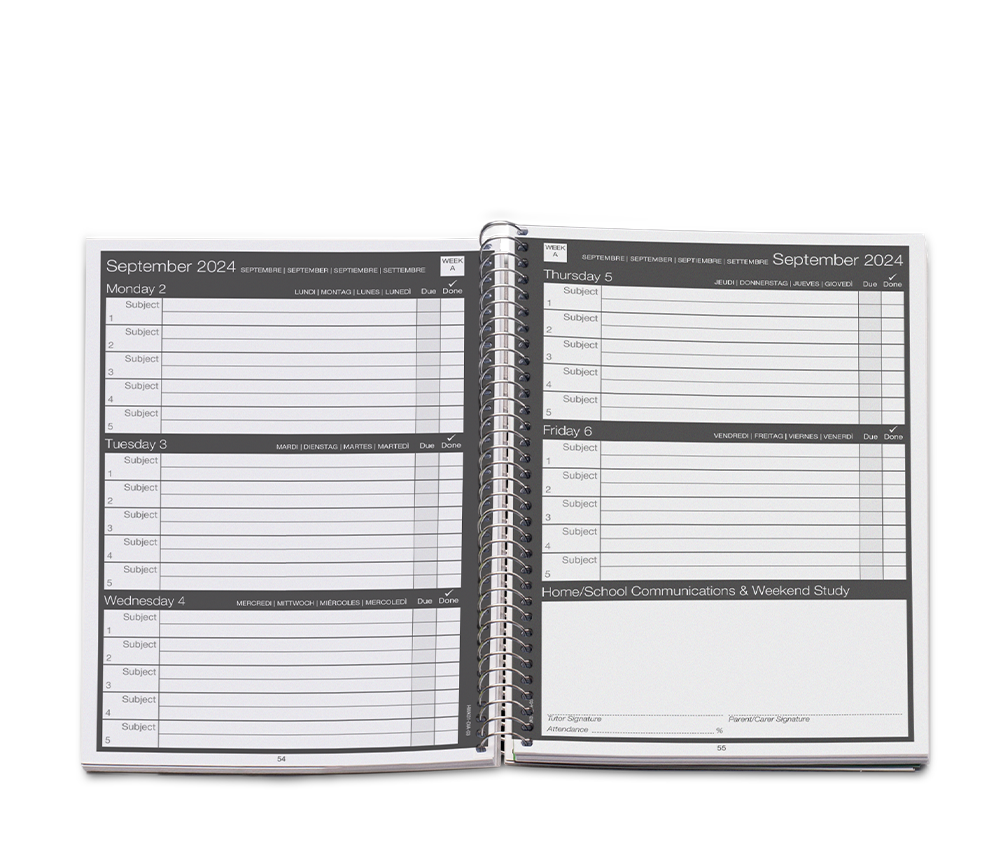
Tailor your planner layout to the specific needs of your students and school.
In a world full of smartphones and digital calendars, paper planners remain incredibly effective in secondary schools. Teachers tell us they prefer them because:
They encourage students to be more intentional and reflective
They reduce digital distractions
They create a physical record of learning, behaviour and communication
They can be designed to match a school's curriculum, values and branding
They put responsibility for time management in the students’ hands
Above all, a well thought out planner sets students up for success by supporting routines, organisation and independence.
Core Sections Every Secondary School Planner Should Include
Below we cover the essential elements found in the most effective secondary school planners used in UK schools today.
1. Weekly Homework Diary Pages
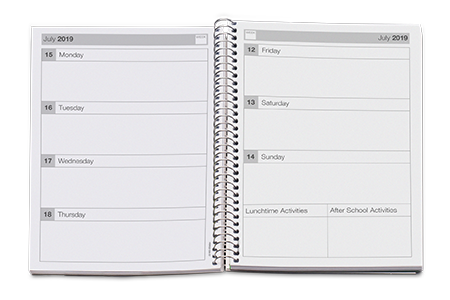
A custom diary page layout can reflect both the needs of the school and the schools brand identity.
The heart of any planner is the homework diary. These pages should be simple, clear and student friendly. Typical features include:
Space for each lesson of the day
Clear boxes for homework tasks
Due dates
Teacher initials
Student tick‑off area
UK secondary schools increasingly look to further customise the planner page layout to address challenges specific to their operational and Ofsted priorities, these can include:
Space to log incorrect spellings
Attendance monitoring by day or lesson
Behaviour monitoring
Daily reminders for equipment or events
Home and school communications
Most teachers prefer a week‑to‑view layout, as it helps pupils see their workload at a glance, however schools can choose from anything from a day-per-page layout which gives students space to record in detail to week-per-pay layouts which reduce the number of pages and therefore the weight and cost of the planner.
Check out our gallery of homework planner page designs or speak to the team about your particular requirements for recommendations.
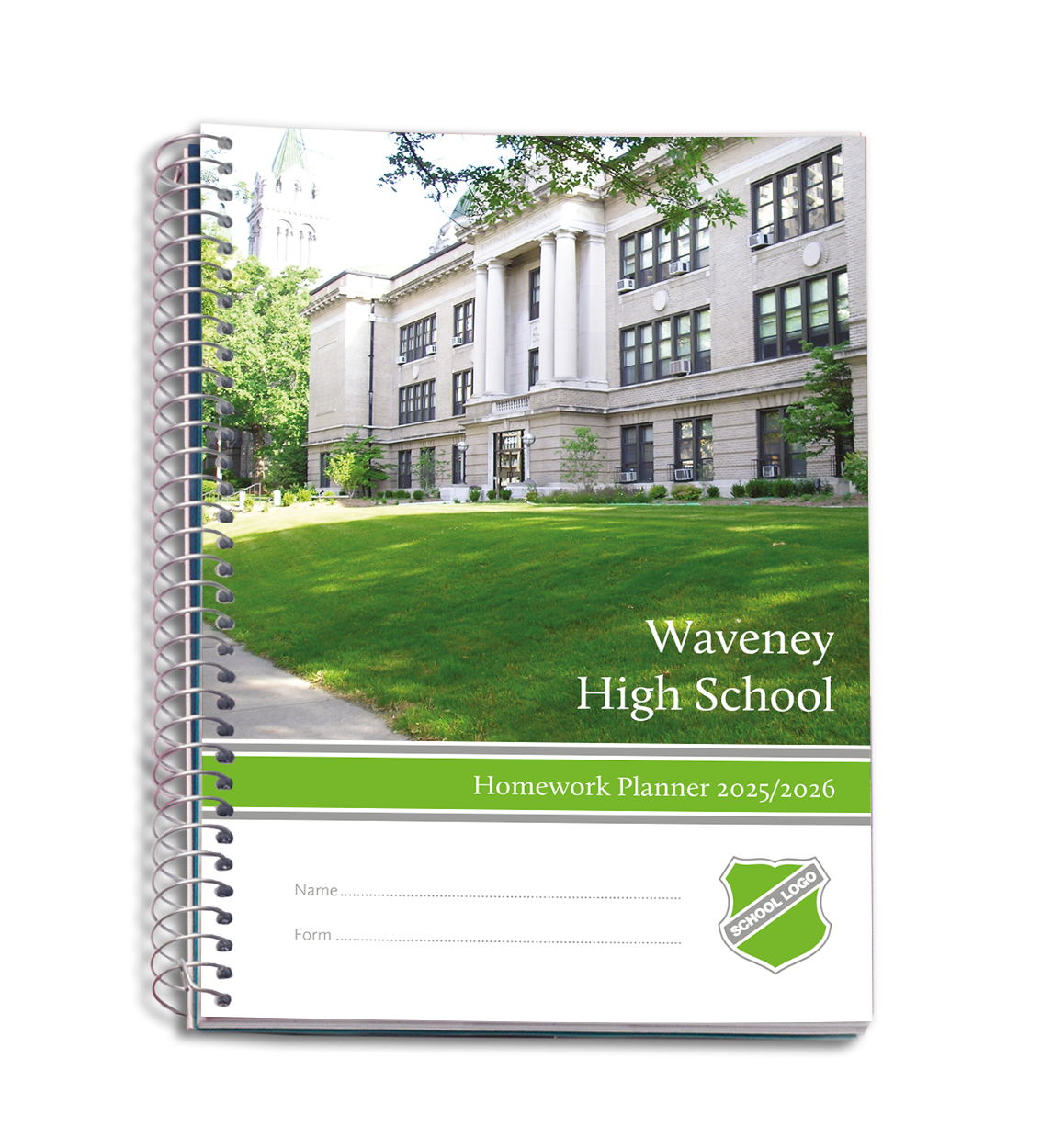
Make your planners vibrant and appealing with a custom cover design
2. School Timetable Pages
Provide space for students to record:
Week A / Week B timetables
Room numbers
Teachers’ names
A timetable at the front or on the back cover of the planner stops students relying on memory and prevents unnecessary lateness.
3. Key School Information
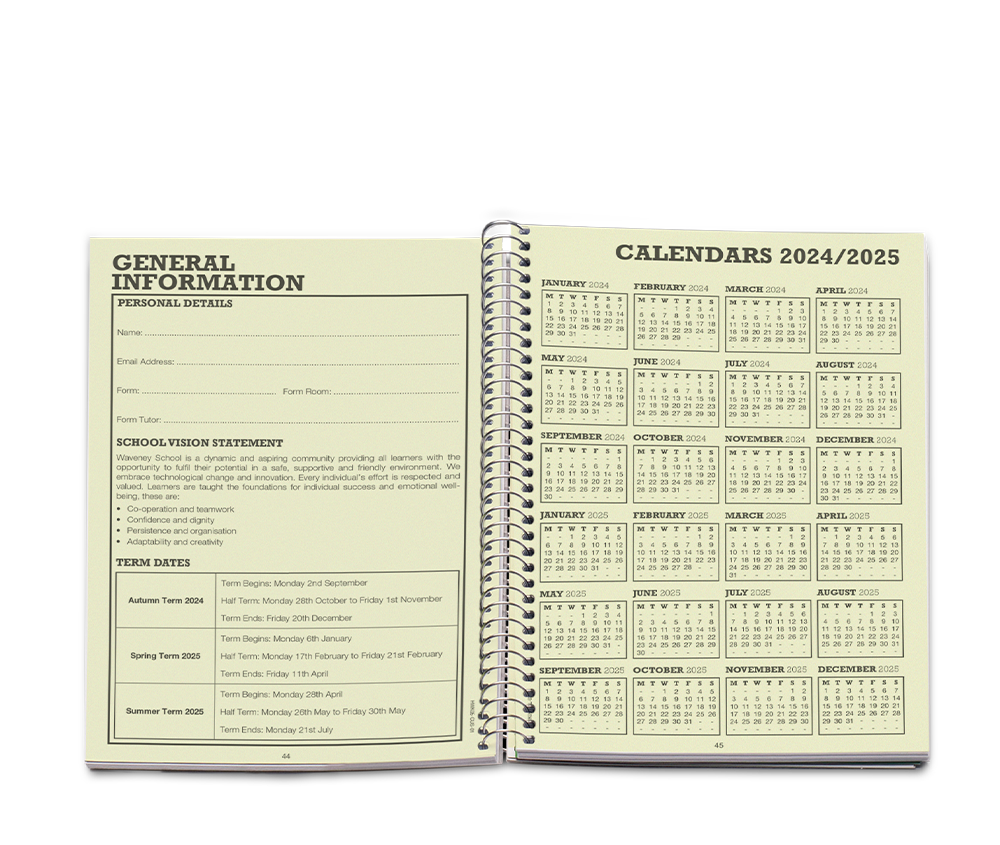
Useful reference content can make school student planners even more useful
Your planner can act as a mini prospectus for students and parents. Include:
Term dates
Uniform requirements
Safeguarding information
School rules
Equipment lists
Rewards and sanctions systems
This not only supports consistency, it reduces the volume of repetitive questions teachers often deal with.
4. Personal Details and Emergency Contacts
Keep this page short and GDPR‑safe. Typical information includes:
Student name and form
Key medical notes
Emergency contact numbers
5. Goal Setting and Reflection Pages
Reflective practice works brilliantly for KS3 and KS4 students. Consider including:
Academic target setting
Personal development goals
End‑of‑term reflection pages
Progress trackers
These pages help build metacognitive skills and can be used during tutor time or mentoring sessions.
6. Study Skills and Revision Support
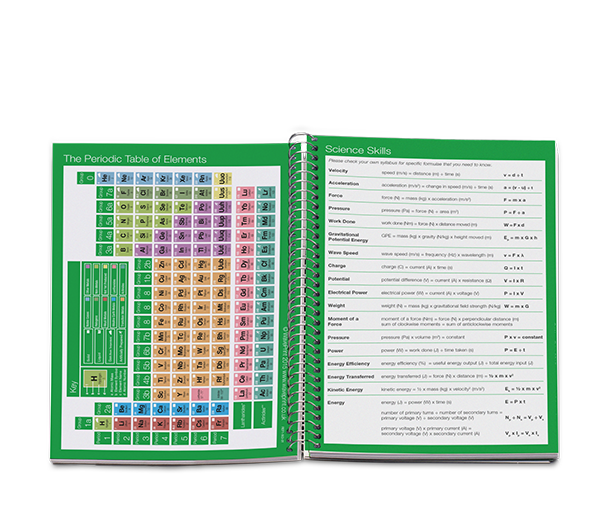
Reference content can save time in class.
Planners are a great place to include quick reference study materials, such as:
Revision timetables
Note‑taking strategies
GCSE exam tips
Memory techniques
Subject‑specific glossaries
Parents appreciate having this information in one place at home.
7. Communication Between Home and School
A planner creates a reliable communication channel. Useful pages include:
Parent–teacher notes
Absence explanations
Detention notifications (optional tear‑out slips are popular)
This helps parents stay engaged without relying on digital portals.
Optional Enhancements and Premium Upgrades (Highly Recommended)
Many schools now choose to add additional pages to tackle pastoral, behavioural and wellbeing priorities.
1. Behaviour Logs
A behaviour log section gives teachers a quick, consistent tool for:
Recording incidents
Tracking patterns
Communicating concerns to parents
Supporting pastoral programmes
These are one of the most popular planner upgrades we offer because they create accountability and remove the need for loose paperwork.
2. Rewards and Achievement Logs
Equally important is celebrating success. Consider adding:
Achievement points tracker
Praise notes
Certificates page
Tutor commendations
This helps reinforce positive culture and is loved by parents.
3. Wellbeing and Mental Health Pages
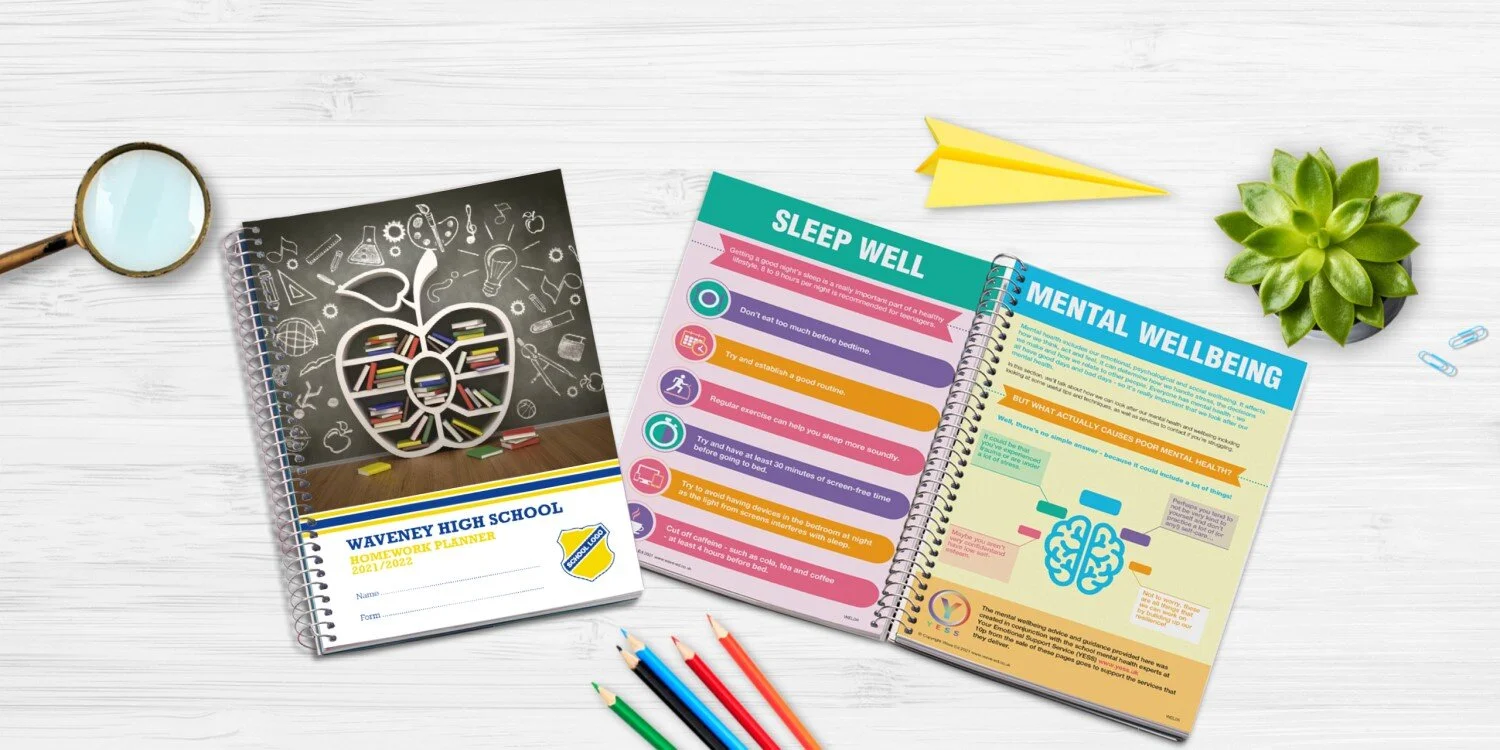
Mental health and wellbeing pages designed in conjunction with a UK teen mental health charity.
More schools want planners that support emotional literacy. Pages might include:
Mood trackers
Stress‑management tips
Mindfulness prompts
Who to speak to in school
These contribute to a whole‑school wellbeing strategy. Wave Ed offer a comprehensive teen mental health guide, developed in conjunction with a UK teen mental health charity. Ask the team about including it in your new student planners.
4. Literacy and Numeracy Support
Especially useful for KS3, you could include:
Spelling rules
Commonly confused words
Maths formula sheets
Times tables
Literacy targets
These pages help reinforce learning and close knowledge gaps.
5. Subject‑Specific Sections
If your school uses planners in lessons, you may want:
Science diagrams
Humanities maps
PE kit checklists
Languages vocabulary lists
These can reduce photocopying and promote independent revision.
Design Tips for an Effective Secondary School Planner
A planner needs to be useful, durable and student friendly. Here are some practical design considerations.
1. Choose a Durable Binding

Coil lock spiral binding comes as standard on Wave Ed student homework planners.
Metal spiral bound planners are the most resilient for heavy daily use. Wave Ed offers metal spiral binding with enhanced coil-lock ends, preventing the binding from unravelling or being removed. Avoid traditional wire-o or double loop binding, which can often suffer from pages falling out after frequent use.
2. Opt for Laminated Covers
A wipe‑clean laminated cover protects against spills and keeps planners looking smart all year. Laminated covers can also double as a dry-wipe board for rough work and calculations.
3. Colour Coding Works Wonders
Colour makes it easier for tired teenagers to find the right sections quickly. Printing different sections on coloured paper is effective and affordable.
4. Keep Page Layouts Clean and Uncluttered
Avoid the temptation to overcrowd pages. White space is your friend. Wave Ed offer a range of professionally designed templates to make your life easier.
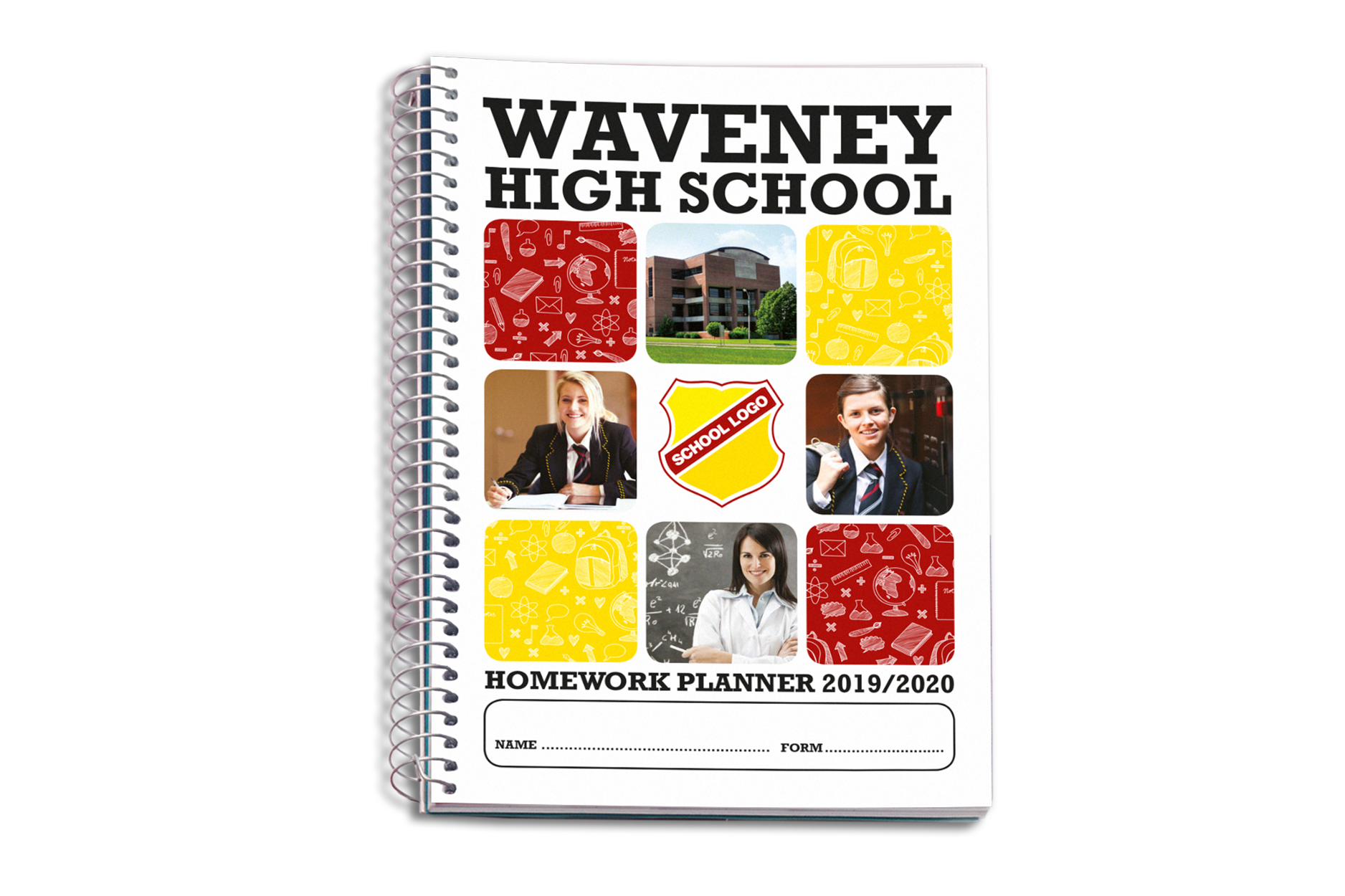
The Wave Ed team can customise your planner cover to match your school brand identity.
5. Add Your School Branding
Custom colours, logos, straplines and values help reinforce your school identity.
6. Add a document pocket
A simple addition that can make a huge difference is a document pocket, giving students a safe place to store loose pages, letters home, praise postcards or sanctions cards.
7. Traffic light cards
Adding Red, Amber and Green ‘trafflic light cards’ to your planner provides a great tool for classroom management and also for voting.
Why a Custom Planner Is Better Than an Off‑the‑Shelf One
Schools that design their own planners report:
Improved organisation
More consistent homework completion
Better parental communication
Stronger adherence to behaviour policies
Higher student engagement
You simply get more impact when the planner matches the needs and culture of your school.
To explore custom designs, check out our secondary school student planners and choose a layout to personalise.
Q&A
What should be included in secondary school planners UK?
A good secondary school planner should include homework pages, timetables, school information, goal‑setting sections, contact pages, behaviour logs and study support materials.
Why do students still need paper planners?
Paper planners reduce digital distractions, support organisation, create a record of behaviour and strengthen communication with home.
What optional extras improve a school planner?
Popular upgrades include behaviour logs, achievement trackers, wellbeing pages, revision tips and subject‑specific support sheets.
How long should a secondary school planner last?
A planner is usually designed to last the full academic year, so durable covers, strong binding and quality paper are essential.
Can we customise our school planners?
Yes. Schools can fully customise layouts, colours, branding and content. Visit our template gallery to browse designs you can personalise.